Prices
About
Course Description
Intended Audience
This workshop is for EMDR trained clinicians who have completed an EMDRIA Approved/Credentialed EMDR Basic Training.
Skill Level of Audience
Intermediate/Advance. Only EMDR trained clinicians can obtain EMDRIA Credits.
EMDRIA credits
5 EMDRIA Credits ONLY (Included in course price). Please. There are NO CE credits for this course. Click here to see the information and instructions on how to obtain your credits/certificates of attendance.
Course Outline
Learning Objectives
The participant will be knowledgeable about the first responder culture.
The participant will be knowledgeable about critical incidents including normal reactions, and phases of the emotional aftermath.
The participant will become familiar with coping strategies for fear and guilt.
The participant will be knowledgeable how the standard EMDR protocol can be provided to first responders.
The participant will be knowledgeable about appropriate interweaves for processing a critical incident.
The participant will be knowledgeable about the differences in outlook between first responders and mental health professionals.
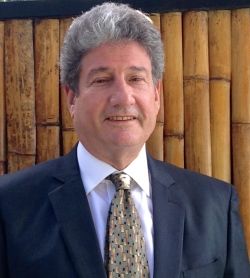
Roger Solomon, Ph.D.
Dr. Roger Solomon is a psychologist and psychotherapist specializing in the areas of trauma and grief. He is on the Senior Faculty of the EMDR Institute and provides basic and advanced EMDR training internationally. He currently consults with the US Senate, NASA, and several law enforcement agencies. As a police psychologist with the South Carolina Department of Public Safety, he is Clinical Director of the Post Critical Incident Seminar (PCIS), a three-day post trauma rehabilitation program that draws on both psychological first aid and EMDR therapy. Working with the South Carolina Army National Guard, he is Clinical Director of the Post Deployment Seminar, a three-day program for war veterans. Dr. Solomon has provided clinical services and training to the FBI, Secret Service, U.S. State Department, Diplomatic Security, Bureau of Alcohol, Tobacco, and Firearms, U.S. Department of Justice (U.S. Attorneys), and numerous state and local law enforcement organizations. Internationally, he consults with the Polizia di Stato in Italy. Moreover, Dr. Solomon has planned critical incident programs, provided training for peer support teams and has provided direct services following such tragedies as Hurricane Katrina, September 11 terrorist attacks, the loss of the Shuttle Columbia, and the Oklahoma City Bombing.
Dr. Solomon has expertise in complex trauma, and collaborates with Onno van der Hart, Ph.D., and others on utilization of EMDR as informed by The Structural Dissociation of the Personality (TDSP). Together with Terese Rando, Ph.D., he has written two articles on EMDR and grief and is writing a book on EMDR and traumatic grief.
Dr. Solomon has expertise in complex trauma, and collaborates with Onno van der Hart, Ph.D., and others on utilization of EMDR as informed by The Structural Dissociation of the Personality (TDSP). Together with Terese Rando, Ph.D., he has written two articles on EMDR and grief and is writing a book on EMDR and traumatic grief.
Frequently Asked Questions
Cancelations
There are no cancelations/refunds for any distance learning courses.
Grievances
All grievances must be in writing to associate@emdrhap.org and will be replied to within 5 - 10 business days.
Trademark Restrictions Purchasing / Showing content to others
** Please note** this distance learning course was given ownership from the presenter, Roger Solomon, to Trauma Recovery/HAP and it cannot be used for resale and only should be viewed by the purchaser.
** HIPAA Regulations: Please note that this course may contain protected health information (PHI). Any unauthorized use or disclosure of this PHI is strictly prohibited, this includes recording and/or reproducing any part of this training video. This video presentation contains videos of clients and case discussions. The presenter has received permission to use the videos to assist in the education and training of clinical professionals who must comply with confidentiality standards.
** HIPAA Regulations: Please note that this course may contain protected health information (PHI). Any unauthorized use or disclosure of this PHI is strictly prohibited, this includes recording and/or reproducing any part of this training video. This video presentation contains videos of clients and case discussions. The presenter has received permission to use the videos to assist in the education and training of clinical professionals who must comply with confidentiality standards.
ADA assistance
Facilities used by Trauma Recovery/HAP for in-person training events are ADA compliant. Should you need any special accommodations (ADA) for an in-person training event, please contact Trauma Recovery/HAP staff at info@emdrhap.org at least 10 business days prior to the start of the training event. On-demand courses with videos offer closed captioning. If you encounter any inaccuracies or synchronization issues with the closed captioning, please contact associate@emdrhap.org.
How to obtain your credits/certificates
Certificates are awarded online after completion of the workshop. To receive your EMDRIA credits complete the entire course and complete the post-test, then print your certificate.
No CE credits are available for this course.
No CE credits are available for this course.